

The Difference Between Feeling Wronged and a Case You Can Prove
In court a sense of justice is not enough on its own: decisions rest on evidence such as documents‚ records and witness testimony.
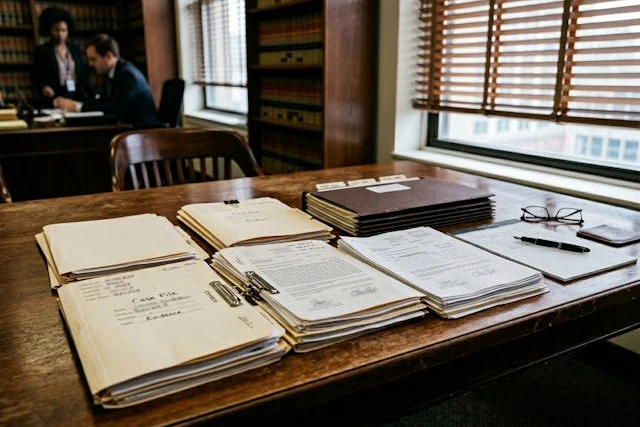
Many people are surprised to discover that their clear feeling is not enough when they need to present real evidence. The reason is that the legal system is based on rules designed to reach decisions grounded in facts. To resolve a dispute‚ information is needed that can be checked and assessed as objectively as possible. When there is no suitable documentation or evidence‚ it is harder to prove a claim even if the personal feeling is very strong. That is why the distinction between feeling and proof is a central part of the legal world.
Personal Feeling Versus an Evidentiary Framework
A sense of justice often grows out of a strong personal experience based on what a person felt or went through. That experience can be completely genuine and even morally justified. In a legal framework‚ however‚ you need to present information that can also be examined from an outside point of view. Evidence makes it possible to present an event in a way that does not depend only on memory or personal feeling. That is why the legal process is based on facts that can be proven.
Written Evidence and Its Role in a Legal Decision
Documents‚ contracts‚ messages and written records can serve as a significant basis for proving various claims. When such documents exist‚ matters can be examined more precisely. A document serves as a record preserved in real time and helps show what actually happened. Evidence of this kind carries great weight in legal proceedings. It provides a clearer picture of the events.
Testimony and How It Is Examined in a Legal Setting
Besides written documents‚ testimony from people can also be an important part of establishing the facts. Testimony is examined with caution‚ however‚ because it is based on human memory. Courts weigh testimony against other evidence to understand the full picture. When testimony is supported by documents or other records‚ its weight increases. That way a decision can be reached based on several sources of information.
The Gap Between Feeling Wronged and Legal Proof
Sometimes people experience what is to them a clear injustice but struggle to present enough evidence of it. In such a case a gap opens between the inner feeling and the ability to prove things in a legal framework. This gap can be especially frustrating because it touches on a deep personal experience. Even so‚ legal rules are designed to ensure decisions are based on facts and not only on feelings. That is why legal proof requires a clear evidentiary basis.
Understanding the Rules of Proof as Part of Handling a Dispute
When you understand the difference between a sense of justice and legal proof‚ you can prepare better for disputes. This understanding highlights the importance of documentation‚ records and keeping relevant information. The clearer the evidence‚ the greater the chance of proving a claim in a legal setting. That is why awareness of these rules can affect how people act in complex situations. This distinction is a central part of navigating the legal world.
In Summary
A personal sense of justice can be very strong‚ but in a legal framework you need evidence through which the claim can be proven. The difference between feeling and proof comes from the need to resolve disputes based on facts. Documents‚ records and testimony together form the basis for a legal decision. When you understand this distinction‚ you can handle disputes more wisely. It turns out that the path to proving you are right sometimes runs through keeping clear evidence.