
People Who Sit a Lot Sometimes Discover the Problem Starts in Their Feet
Why the heaviness that comes with long hours of sitting can start in the feet‚ and how small movement habits ease the strain.
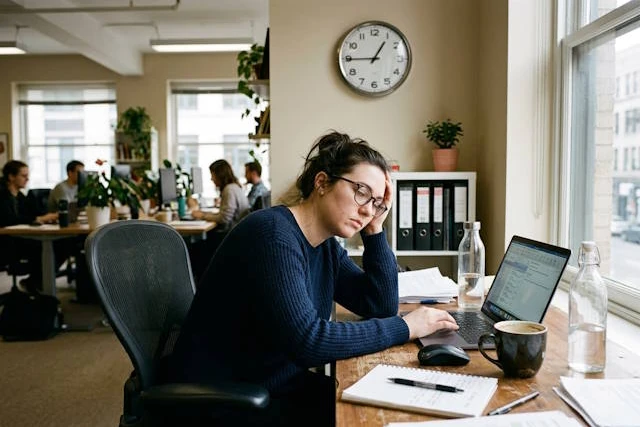
Quite a few people discover that the heavy feeling that appears in the afternoon is actually related to how the body rests on the floor or the work surface throughout the day. When the feet do not get enough movement‚ the small muscles inside them work only partially and gradually lose their natural flexibility. In this state‚ a sense of strain develops that gradually climbs upward and affects the knees and lower back as well. Understanding that the feet play an important role in everyday posture can change the way people think about prolonged sitting. A small change in daily habits can sometimes reduce accumulated strain that has been building up for long months without being clearly felt.
The Body's Foundation and the Wider Meaning of Everyday Posture
The feet are the main point of contact between the body and the ground‚ so they play an important role in stability and in distributing weight across the entire skeleton. When sitting is prolonged and does not include enough movement‚ there is a gradual decline in the activity of the small muscles that stabilize the foot during standing and walking. This can lead the body to compensate for the lack of activity by placing extra load on other areas. As a result‚ people may feel stiffness even in places that seem unrelated to the feet themselves. Understanding the broader anatomy of the body makes it possible to see how a small change in one area can affect a whole chain of physical sensations.
Daily Movement and the Importance of Gradual Activation
Moderate activity during the day can significantly change the way the body responds to hours of sitting. Even a short movement of a few minutes every hour can reawaken the small muscles in the feet and bring a sense of vitality back to the whole area. When the legs get a chance to move‚ blood flow improves and the body is better able to maintain a balance between rest and activity. In many cases‚ the accumulated tiredness decreases after just a short period of changing habits. The goal is not to turn every day into a workout routine but to create a natural flow of movement that prevents prolonged strain.
Early Signs That Appear During Working Hours
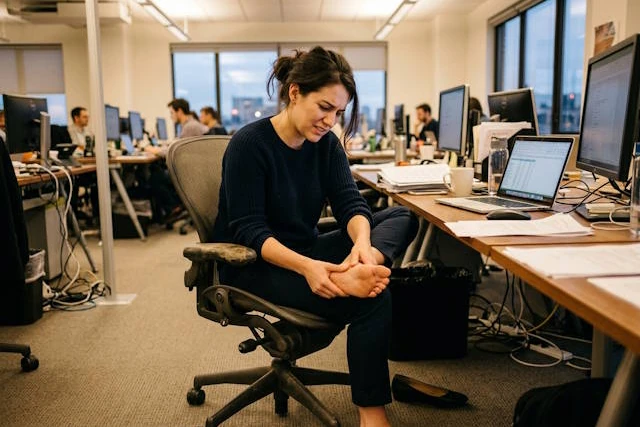
A heavy feeling in the feet‚ a slight tingling or a frequent need to move your legs can be subtle signals that the body needs a short break. Many people get used to ignoring these sensations‚ thinking they are only a passing reaction. However‚ when the signs recur over many weeks‚ they may point to accumulated strain that begins in the lowest part of the body. Paying attention to these signals helps you know when it is time to get up‚ stretch your legs or move briefly. Sometimes it is a very small change in routine‚ but one that eases the load on the body significantly.
Modern Sitting Habits and Their Physical Consequences
Office work in recent decades has created a reality in which people spend many hours in front of screens while keeping an almost fixed posture. This posture may seem comfortable at first‚ but over time it reduces the involvement of many muscle groups. When the feet do not take part in daily activity‚ the whole body loses some of its natural balance. The stiffness that gradually develops is not necessarily related to general fatigue but to an accumulated lack of movement. A slight change in sitting angle or a short walking break can sometimes change the whole picture.
A Fresh Look at an Area That Usually Goes Unnoticed
Most people pay close attention to the back‚ neck or shoulders when it comes to physical strain related to sitting. The feet‚ by contrast‚ often remain outside the focus of everyday thinking despite their great importance. When you begin to treat them as a central part of the body's movement system‚ it becomes clear how much they affect your overall sense of well-being. Greater awareness of this area makes it possible to spot small changes in posture or comfort early. This understanding may lead to a healthier routine that reduces strain over time.
In Summary
Prolonged sitting sometimes creates the feeling that strain is concentrated in the back or neck‚ but in many cases the original source of fatigue actually begins in the feet. When this area gets less movement during the day‚ the whole body may lose some of its natural balance. Greater awareness of how the feet take part in the daily routine can lead to small but meaningful changes. Short movements‚ attention to posture and a broad understanding of the body's structure help reduce accumulated strain naturally. Sometimes the smallest details of a routine are the ones that make the difference in how the body feels overall.